
Warehouse skills and training
Forklift and Reach-Truck Certificates in the Netherlands: What Foreign Workers Should Check
Already trained abroad, or considering a course? Check the equipment, your training record and the employer’s requirements before you pay for training or plan your start.
Can you use a foreign forklift certificate in the Netherlands?
A foreign certificate can help show what training you completed. It does not, by itself, establish that you can operate every forklift, reach truck or electric pallet truck at a Dutch workplace. Ask the prospective employer to review the record and confirm any assessment, additional training and site instructions needed.
The useful question is: “Does my training and recent experience meet the requirements for this equipment and this job?”
What do Dutch forklift rules require?
Dutch occupational safety rules require specific competence for operating self-propelled mobile work equipment. Arboportaal explains this requirement, including its application to forklifts.
A particular forklift certificate is not prescribed as a general statutory licence. However, an employer or client can require a certificate as evidence of training. The employer must still ensure that the operator has suitable competence and workplace instruction. BMWT’s training guidance explains why a certificate does not replace those responsibilities.
Separate three things when reading a vacancy: the skills needed to operate the equipment, the documents the employer requires, and the instruction and assessment needed at the workplace. This guide concerns internal warehouse equipment; public-road driving and specialised lifting work have additional considerations.
Forklift, reach truck and EPT are different skills
“Warehouse equipment experience” is too broad for a useful application. State which equipment you have operated and check exactly what your training covered.
Forklift
Dutch: heftruck
If your experience is with a counterbalance forklift, say so. Describe the loads, loading work and warehouse setting you know.
Check whether the vacancy involves a different truck, attachment or task from your previous work.
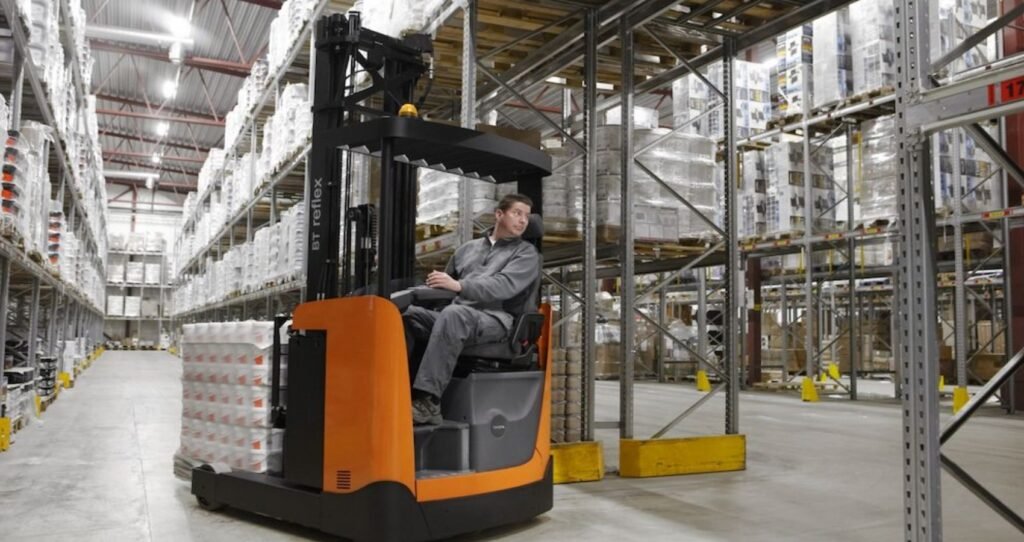
Reach truck
Dutch: reachtruck
Describe your actual reach-truck experience, including the racking environment and heights you have worked with.
Do not claim reach-truck competence solely because you hold a forklift certificate. Check the equipment named on the record.
Electric pallet truck
Dutch: elektrische pallettruck / EPT
Explain whether you used a pedestrian-controlled or ride-on model. An EPT is not the same as a manual hand pallet truck.
Powered pallet-truck work also needs appropriate skills and instruction. Ask what training evidence the employer requires.
Combined courses exist, but check the equipment and practical assessments included. The technical-wholesale sector’s guidance on mobile transport equipment illustrates why training must match the actual tasks.
What to send if you trained in another country
Send readable copies of the original training documents through the application route provided. Prepare:
- Certificate details: your name, the issuing organisation, certificate number, issue date and any expiry date.
- Equipment coverage: the truck types or categories included, with an explanation if the category names are unfamiliar.
- Training and assessment: any available course description showing theory, practical training and assessment.
- Recent experience: when you last used each type of equipment and the work you performed.
- Verification information: the issuer’s contact details or its own verification service, where available.
Ask whether a translation is needed and what form it should take before paying for one. A translation makes a document easier to read; it does not establish acceptance or expand the equipment covered.
Training provider NoRisk explains that foreign certificates can provide evidence of training and experience, while the employer remains responsible for assessing competence. Do not assume automatic acceptance or automatic rejection based only on the country of issue.
Are forklift certificates always valid for five years?
Five years is used by training providers, but it is not a universal statutory validity period for forklift certificates. Check your own document, the issuing scheme and the employer’s requirements.
For example, ARBO centrum states that its certificates are valid for five years and distinguishes that period from a general legal requirement.
Tell the recruiter if your certificate has expired or you have not operated the equipment recently. Ask what refresher training or assessment is required. An unexpired card does not replace current skills or instruction for unfamiliar equipment.
Do EPT drivers need a certificate?
An EPT certificate can be an employer’s requirement even though a named EPT certificate is not generally prescribed by law. The operator still needs the competence to use the powered equipment safely. Westpoort’s EPT training guidance makes this distinction.
If a vacancy mentions EPT experience but says nothing about a certificate, ask what evidence and training are required. Missing wording in a vacancy is not confirmation that anyone can start operating the equipment without instruction.
Ask these questions before booking a course
- Which exact truck types and tasks does this role involve?
- Will the employer accept my existing training record, and what additional evidence is needed?
- Is a particular training scheme or certificate required?
- Do I need beginner training, a refresher course or an assessment of existing skills?
- Are practical training and assessment included, and in which language?
- Who arranges and pays for training, including any retest, travel or time away from work?
- What must be completed before I start, and what workplace instruction follows?
Check the whole course. An online theory module is not, by itself, evidence that your practical skills have been assessed. Ask how hands-on training and assessment are provided and whether the employer accepts the resulting record.
Confirm that you can understand the training, assessment and workplace instructions. A course advertised in English does not establish the language requirement for the job.
Show experience and certificates separately in your CV
List the equipment you actually used, your tasks and how recently you performed them. Then list your training records separately, with the issuer and dates. This helps the recruiter distinguish practical experience from the scope of a certificate.
If you have forklift experience but have never driven a reach truck, make that clear. If you completed a course but have little workplace experience, say that too. Avoid describing yourself as certified for all warehouse equipment.
For the wider application checklist and warehouse-role differences, read our logistics work preparation guide.
Compare the requirements with your experience
Use the reach-truck role page and order-picker and EPT role page to check the requirements for each role. Confirm availability and acceptance of your documents with the recruiter before arranging a start.
Celoria reviews candidate profiles and refers suitable applicants to its clients. Training documents do not guarantee selection, and the employing organisation makes the hiring decision.
Sources and further information
Sources checked on 28 October 2026. The sources below are in Dutch. Provider-specific course terms and certificate periods should be checked with the issuer.
- Arboportaal: use of work equipment — government guidance on specific competence.
- BMWT-Train guidance — certificates and continuing employer responsibilities.
- Technical-wholesale sector guidance — task-specific training and competence.
- NoRisk: certificate validity and foreign certificates — provider guidance on evidence and assessment.
- ARBO centrum: checking a forklift certificate — issuer checks and its five-year certificate period.
- Westpoort: EPT training — certificate requirements and training.