
Choose the role that fits your skills
Industrial Painter, Car Painter or Powder Coater: Which Work Fits Your Experience?
Compare the surfaces, processes and finishing tasks behind these job titles, then show a recruiter what you can do independently and where you need training.
What is the difference between the three roles?
An industrial painter may coat manufactured parts or structures; a car painter focuses on vehicle preparation and refinishing; a powder coater works with a dry-powder coating process. The best match depends on your actual tasks, materials, equipment and level of independence.
The labels overlap. Powder coating is used in industrial production and on automotive components. In this comparison, “industrial painter” mainly means wet-coating work on products or structures, while “car painter” mainly means vehicle bodyshop refinishing. Read each vacancy for its exact process.
Industrial painter: parts, structures and protective finishes
This work can involve metal parts, frames, machinery components or steel structures. Depending on the role, you may prepare surfaces, apply primers and finishing coats, and check the coating against the job specification. Application can involve spray equipment, brushes or rollers.
Show the work you have done
- The materials and products you coated, such as steel frames or machinery parts.
- Your preparation work: cleaning, sanding, masking or blasting, where applicable.
- The liquid-coating systems and application equipment you actually used.
Check the vacancy carefully
Ask whether the work is in a workshop or on site, which coating systems are used, and whether blasting or other preparation is a separate task. Explain whether you set up equipment and checked film thickness yourself or worked under supervision.
Compare your background with the industrial painter role requirements.
Car painter: colour matching and vehicle refinishing
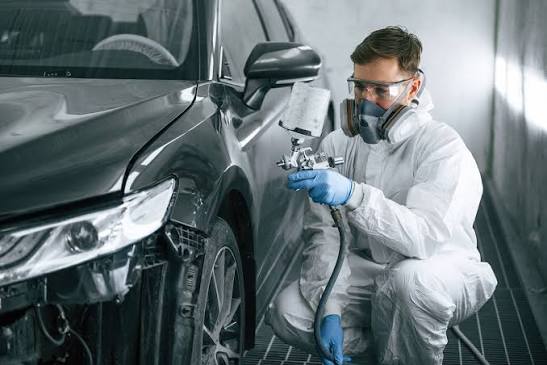
Car painting centres on the appearance and consistency of the vehicle finish. Tasks can include checking prepared panels, masking, mixing and matching colour, applying the paint system, polishing and inspecting the result. The Dutch occupational title is often autospuiter.
Show the work you have done
- Whether you painted individual panels, repaired areas or complete vehicles.
- Your experience with colour matching, blending and the paint systems used.
- The preparation, spraying, clear-coat and finishing stages you handled independently.
Check the vacancy carefully
A preparation role and a full painting role can require different skills. If your experience is mainly sanding, filling and masking, describe that clearly. Ask whether the workshop expects independent colour matching and final refinishing from the start.
Review the car painter role requirements for the particular workshop expectations.
Powder coater: preparation, application and production flow
Powder coating uses a dry coating material. A common process applies it electrostatically to prepared parts, followed by curing in an oven. Roles can involve manual application, automated equipment or several stages of a production line.
Show the work you have done
- The parts and materials you handled, and whether application was manual or automated.
- Your involvement in pre-treatment, hanging, coating, unloading or packing.
- The equipment settings and quality checks you were responsible for, if any.
Check the vacancy carefully
“All-round coater” may include several line tasks. Hanging and packing parts is useful production experience, but it does not by itself show independent powder application skills. Ask which stage you would perform and what training is available.
Check the powder coater and all-round coater role description.
Which skills can transfer to another painting role?
Careful preparation, masking, following work instructions and recognising finish defects can be relevant across these roles. A move still needs an assessment of the new equipment, products and finish standard.
- Car painting to industrial wet coating: discuss the size and shape of the workpieces, coating specifications and application equipment.
- Industrial painting to car refinishing: check your experience with vehicle preparation, colour matching, blending and the final appearance expected in a bodyshop.
- Liquid spraying to powder coating: explain your preparation and quality experience, then identify any training needed in powder application, line operation and curing controls.
Use the process, not only the job title. If you have painted steel parts with liquid coatings, say that. A recruiter can assess that background more accurately than a CV that simply says “painter”.
Prepare a useful painting-work summary
For each recent job, give a short account of:
- What you coated: the parts, vehicles, structures and substrate materials.
- How you worked: the preparation methods, coating type and equipment you used.
- Your responsibility: preparation only, independent application, equipment setup, line operation or final inspection.
- How you checked quality: the checks you actually performed and how you reported defects.
- How recent it is: when you last used the process and what training or certificates you hold.
If you share permitted photographs of your work, add a brief explanation of your own contribution. A finished-product photo alone does not show which stages you performed.
Ask these questions before accepting a role
- Which products, substrates and coating processes will I work with?
- Is the role preparation, application, line support or the full process?
- What must I do independently, and is there a practical assessment?
- Which quality checks and production records are part of the job?
- What language, safety training and site-specific certificates are required?
- What are the confirmed work location, hours, pay basis, accommodation and transport terms?
For work with coating products, ask about the actual product information, workplace instruction and protective measures. Arboportaal’s hazardous-substances guidance explains why the substances and working conditions matter. This comparison does not replace product or workplace training.
Choose a role based on your strongest evidence
Start with the process you know best, then compare the specific requirements. If you want to move into another type of coating work, explain your transferable experience and the skills you still need to develop.
Celoria reviews candidate profiles and refers suitable applicants to its clients. The employing organisation makes the hiring decision. Confirm availability and the final conditions for the specific role before arranging a start.
Sources and further information
Sources checked on 28 October 2026. These describe occupational tasks and coating processes; the requirements of an individual vacancy can differ.
- KiesMBO: industrial coating occupation — preparation, application and quality responsibilities; in Dutch.
- KiesMBO: autospuiter — vehicle preparation and refinishing tasks; in Dutch.
- PPG: powder-coating application process — common electrostatic application and curing.
- Arboportaal: hazardous substances — workplace and product information; in Dutch.